Trzly.
Sign in
Trzly · Japan Nara
Nara
663highland / Wikimedia Commons (CC BY 2.5)
Vertrauensführer · betrugsgeschützt

Nara

Japan
Schätzung
Fair ab 5 $

Übersicht

Nara was Japan's first permanent capital in the 8th century, and that short golden age left behind an extraordinary concentration of temples, shrines and treasures now protected as UNESCO World Heritage. The heart of it all is Nara Park, a vast green expanse where more than a thousand wild sika deer roam freely,…

Photos

März–Mai und Oktober–November

Beste Reisezeit

Geheime Schätze

Enter Nara Park at dawn, before the day trippers arrive from Kyoto, to have the deer, the misty lawns and Todai-ji's approach almost to yourself in soft light.

Karte

Karte wird geladen…
Auf der Karte ansehen
Für dich · in deiner Nähe

Personalisierte Auswahl basierend auf deinen Interessen und dem, was in der Nähe ist.

Aktivitäten

Die Sehenswürdigkeiten und Erfahrungen, die deine Zeit wert sind — mit fairen Preisen.

7 Aktivitäten
Sehenswürdigkeit

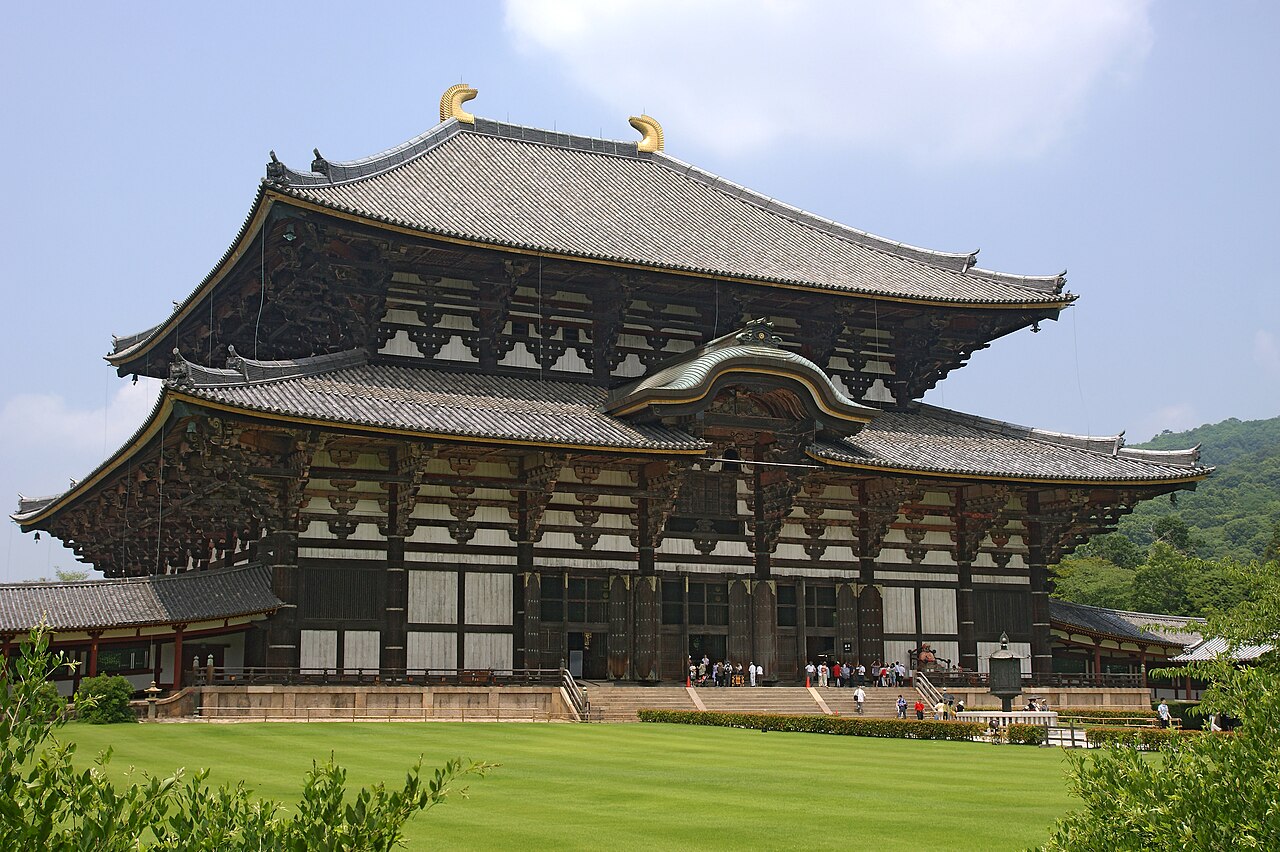
Todai-ji and the Great Buddha

Nara's most famous sight, a monumental temple whose Great Buddha Hall is one of the world's largest wooden buildings and houses a 15-metre bronze Buddha. Arrive early to beat tour groups, and look for the pillar with a hole the size of the Buddha's nostril that visitors squeeze through for luck.

5–8 $ 1,5 Std.
Erlebnis

Nara Park and its deer

A huge public park where over a thousand wild sika deer roam freely and are treated as sacred messengers. Buy a pack of the official deer crackers to feed them, and note that some deer learn to bow for food. They are wild animals, so keep food out of sight until you are ready and mind small children.

Kostenlos – 2 $ 1,5 Std.
Sehenswürdigkeit

Kasuga Taisha

Nara's grand Shinto shrine, set in an old-growth forest and famous for the roughly 3,000 stone and bronze lanterns lining its paths and halls. The outer grounds are free to wander; a small fee lets you into the inner area where the hanging lanterns are most atmospheric, especially in low light.

Kostenlos – 5 $ 1 Std.
Sehenswürdigkeit

Kofuku-ji

An ancient temple beside the park with a striking five-storey pagoda, one of the tallest in Japan, and a superb treasure hall of Buddhist statuary including a famous three-faced, six-armed figure. Central and easy to combine with the park on the walk in from the stations.

4–7 $ 1 Std.

Taste it here

The must-try local dishes, sweets and fruits — including the exotic ones you won't find back home.

Kakinoha-zushi (persimmon-leaf sushi)DishKyu3a / Wikimedia Commons (CC BY-SA 4.0)

Kakinoha-zushi (persimmon-leaf sushi)

Nara's signature dish: pressed vinegared rice topped with salted mackerel or salmon and wrapped in a fragrant persimmon leaf. The technique is around three centuries old, born when landlocked Nara needed a way to preserve fish, as the leaf's tannins slow spoilage and perfume the rice.

Buy a boxed set from a specialist shop or a station stand as a portable meal; unwrap the leaf before eating, as it is there to flavour and protect, not to be eaten.

Dish

Narazuke (sake-lees pickles)

A Nara specialty for over a thousand years, made by repeatedly marinating gourd, cucumber, melon or ginger in sake lees until they turn amber, deeply savoury and slightly boozy. The name literally means 'Nara pickle', and it pairs classically with plain rice or tea.

The flavour is intense and alcoholic-sweet, so start with a small slice; it makes a distinctive, long-keeping souvenir from the old shops in Naramachi.

Miwa somenDishAsturio Cantabrio / Wikimedia Commons (CC BY-SA 4.0)

Miwa somen

Extremely thin hand-pulled wheat noodles from the Miwa area of Nara, said to be a birthplace of somen with centuries of tradition. Served chilled with a dipping sauce in summer or in a hot broth (nyumen) in the cooler months, prized for a delicate, springy texture.

In hot weather order it cold with a light soy-dashi dip; a bundle of dried Miwa somen also travels home well as a gift.

Kuzumochi (kudzu jelly cake)SweetOcdp / Wikimedia Commons (CC0)

Kuzumochi (kudzu jelly cake)

A cool, translucent, wobbling sweet made from kuzu (kudzu) starch, the finest of which comes from Yoshino in Nara's southern mountains. Clean and barely sweet on its own, it is typically served with toasted soybean flour (kinako) and dark sugar syrup (kuromitsu).

Best eaten fresh and chilled the same day, as it loses its clarity and bounce quickly; a Naramachi tea house is the classic place to try it.

See all 6 dishes
Yomogi mochi (mugwort rice cake)SweetMidori / Wikimedia Commons (CC BY-SA 3.0)

Yomogi mochi (mugwort rice cake)

Soft green rice cakes flavoured and coloured with yomogi (Japanese mugwort), often filled with sweet red bean paste. In Nara they are a popular treat, with one famous downtown shop drawing crowds for its lightning-fast, theatrical mochi pounding.

Eat it the day you buy it while it is still soft; catching the high-speed mochi pounding at a well-known Nara shop is a fun little spectacle in itself.

Drink

Nihonshu (Japanese sake)

Nara has deep claims as a cradle of refined clear sake, with temple brewing traditions that helped shape modern nihonshu. The region and nearby Kansai still produce well-regarded sake, and Naramachi keeps old sake merchants where you can taste and learn.

Look for a Naramachi sake shop offering small tasting flights; drink responsibly, and a well-chosen bottle makes a meaningful local souvenir.

Nara community

Ask, share, or connect with travelers nearby — and earn points.

Posts save on this device — sign in to keep them and earn points.

Places in Nara

Real restaurants, cafés, sights and things to do across the city — live from the map, with our fair-price and scam intelligence on top.

Fair price here:5–6 $
Watch out: Tourist-priced eateries by the gates
Searching nearby…

Faire Preise & Betrugsschild

Was Einheimische zahlen — prüfe ein Angebot, bevor du Bargeld gibst.

Is this price fair?

Direkt gebucht? Viele Anbieter bieten innerhalb von 24 Stunden kostenlose Stornierung.

Kansai Airport to Nara by train
pro Person
11–16 $
Kyoto to Nara train
pro Person
5–9 $
Osaka to Nara train
pro Person
4–6 $
Deer crackers (shika senbei)
per pack
1–2 $
Todai-ji Great Buddha Hall
pro Person
5–6 $
Mid-range restaurant meal
pro Person
8–18 $
Nara city loop bus
pro Fahrt
2 $
Live-Preise kommen baldAktualität · 4 Quellen · faire PreisanalyseAffiliate-Hinweis: Einige Links bringen Trzly eventuell eine Provision ein — das ändert nie, was wir dir zuerst zeigen, und kostet dich nichts extra.
Verifiziert 7. August 2026 · 4 Quellen · Zuverlässigkeit 70%
Nara Maschen — lies, bevor du landest
Fairer Preis und Betrugsschutz für jeden Service.

Find your flight

Set your city and dates — we open the live results, no inventory held

Flights to Nara

Opens Aviasales — a real flight search — with your departure city already detected. Pick your dates and route there.

Book everything — at the honest price

Trzly compares across the big providers and points you to the cheapest. We don't take your booking or hold your money — we send you straight to the source, name the price, and warn you about scams.

How Trzly ranks

Cheapest for you first — never by commission. When booking direct is cheaper, we say so, even when we earn nothing. Rank order is a function of price and trust only.

Insider tricks for the lowest price

Real tactics that actually save you money — we surface them, not just talk.

  • Always pay in the local currency — decline "pay in your currency" (DCC) to save 3–7%.
  • Open in a private window and clear cookies — some sites raise the price on repeat visits.
  • A transit/layover flight is usually cheaper than a direct one — worth the stop.
  • Book flights on Tuesday/Wednesday; avoid Friday and Sunday.
  • Book hotels direct on their own site — the member rate often beats the middlemen.
  • Ask for the "app-only rate" — often hidden from the public price.
  • Free cancellation? Book now and re-book if the price drops later.
  • Buy attraction tickets on the official site, not a reseller — no service fee.
  • A local eSIM instead of roaming — up to 90% cheaper.
  • Set a price alert and watch for the drop before high season.

Stays

Hotels, apartments & guesthouses

Compare live on:Booking.comExpedia

Live provider prices turn on once connected — we never show a fake price.

Things to do

Tours, tickets & local experiences

Compare live on:ViatorGetYourGuideKlook

Live provider prices turn on once connected — we never show a fake price.

Dining

Restaurants, cafés & honest local prices

Compare live on:OpenTableGoogle Maps

Live provider prices turn on once connected — we never show a fake price.

Flights

Compare airlines & smart routes

Compare live on:Google Flights

Live provider prices turn on once connected — we never show a fake price.

Getting around

Trains, buses, transfers & car hire

Compare live on:Rome2Rio

Live provider prices turn on once connected — we never show a fake price.

Aktualität · 4 Quellen · faire PreisanalyseAffiliate-Hinweis: Einige Links bringen Trzly eventuell eine Provision ein — das ändert nie, was wir dir zuerst zeigen, und kostet dich nichts extra.
Practical infoBest time · safety · hidden gems · FAQ

Anreise und Fortbewegung

Echte Fahrpreise, keine Touristenpreise.

Wie man dort hinkommt
Train from Kyoto 45 Min.5–9 $

Frequent JR and Kintetsu trains link Kyoto and Nara in around 35 to 45 minutes. The most popular day-trip route; choose JR if you hold a Japan Rail Pass, or Kintetsu for a slightly faster limited express with a supplement.

Train from Osaka 40 Min.4–6 $

Kintetsu from Osaka-Namba and JR from Osaka reach Nara in roughly 35 to 50 minutes for a low fare. Kintetsu Nara Station sits closer to the park than JR Nara, saving a short walk on arrival.

From Kansai Airport 1,5 Std.11–16 $

There is no direct line, so expect one change, usually via Tennoji or Osaka, for about ninety minutes by train. Cheaper than the airport limousine bus, and JR sections may be covered by a rail pass.

Wie man sich fortbewegt
Walking the sights

Nara's core temples, the park and Naramachi are compact and best explored on foot, with the deer and old streets part of the pleasure. Comfortable shoes and water in summer are all you need.

City loop bus2 $

A flat-fare loop bus circles the stations and major sights, useful in heat or with luggage. Pay by IC card or coins on boarding; frequency is good but the walkable core often makes it optional.

Taxi5–12 $

Metered taxis are clean, honest and readily found at the stations, handy for distant spots or late in the day. Fares are higher than in many countries, and short central hops are usually quicker on foot.

Beste Reisezeit

März–Mai und Oktober–November

Spring (late March to May) and autumn (October to November) are the finest, with cherry blossom or fiery maple leaves in the park and mild, comfortable days. Summer is hot and humid, and the June to October period can bring typhoons, while winter is cold but clear and quiet, and the deer look especially striking against frost or the rare dusting of snow.

Sicherheit

VorsichtThe park deer are wild animals, not pets, and can bite, head-butt or kick, especially when they smell food. Keep crackers hidden until you are ready, feed quickly and calmly, show open empty hands when you have none left, and watch small children closely around them.
VorsichtNara summers are hot and humid, and much of the park and temple grounds are open and shadeless. Carry water, use the shaded halls and museums in the midday heat, and plan the open sights like the park and Mount Wakakusa for early morning or late afternoon.
VorsichtThe wider June to October season can bring heavy rain and occasional typhoons that disrupt trains and close outdoor sites. Check the forecast and rail updates on those days, keep a flexible plan, and have an indoor museum or temple hall as a wet-weather alternative.
Geheime Schätze

Enter Nara Park at dawn, before the day trippers arrive from Kyoto, to have the deer, the misty lawns and Todai-ji's approach almost to yourself in soft light.
Time a late-afternoon visit to Kasuga Taisha so the thousands of hanging bronze lanterns glow in the dim inner halls, and wander its ancient cedar forest on the way.
Duck into a Naramachi townhouse cafe or the old Koshi-no-Ie merchant house to see how Nara families once lived, then buy fresh yomogi mochi pounded to order nearby.

Häufig gestellte Fragen

Can Nara be done as a day trip?

Yes, Nara is one of the easiest day trips in Japan, around 35 to 45 minutes from Kyoto and a similar time from Osaka. A single day covers Todai-ji, the deer park, Kasuga Taisha and Kofuku-ji, though an overnight lets you enjoy the park in the quiet early morning.

Are the Nara deer safe to feed?

Generally yes, but they are wild animals that can be pushy around food. Buy the official crackers, feed calmly, avoid teasing them by holding food back, and show open empty hands when you are finished. Keep a close eye on young children, as the deer can nip or nudge.

Which train line should I take to Nara?

From Kyoto and Osaka you can use either JR or Kintetsu. Choose JR if you hold a Japan Rail Pass, as Kintetsu is not covered. Kintetsu Nara Station is closer to the park, while JR Nara is about a kilometre further, so factor in a short extra walk.

How many hours do I need in Nara?

A focused visit of five to six hours covers the main park sights comfortably at a walking pace. Add time for the Nara National Museum, Naramachi old town or Mount Wakakusa, or stay overnight to catch the park at its calm best around sunrise and sunset.

What food is Nara known for?

Look for kakinoha-zushi (sushi wrapped in persimmon leaves), narazuke (vegetables pickled in sake lees), hand-pulled Miwa somen noodles, and sweets like kuzumochi and freshly pounded yomogi mochi. Nara is also considered a birthplace of Japan's refined clear sake.

Aktualisiert · von 5 verifizierten Quellen · Zahlen werden vor Veröffentlichung automatisch überprüft.