 Sight
SightThe Egyptian Museum
The historic museum on Tahrir Square, packed with pharaonic antiquities. Many headline pieces are moving to the Grand Egyptian Museum, so check what is on display before visiting. A guide adds context.
$10 – $18 3 hr
 Hatem Ramadan / Unsplash
Booking sites sell to you. We protect you: verified price bands plus the exact tricks travellers hit in this place.
Not just a guide — a community. Travellers who've been here give real tips, and people going your dates are here to meet.
Cairo is Egypt's sprawling capital and the largest city in the Arab world, a dense, energetic place spread along the banks of the Nile. It is best known as the gateway to the pyramids on its western edge, but the city itself holds treasures that reward days of exploring. The Egyptian Museum and the newer Grand…
The sights and experiences worth your time — with honest prices.
SightThe historic museum on Tahrir Square, packed with pharaonic antiquities. Many headline pieces are moving to the Grand Egyptian Museum, so check what is on display before visiting. A guide adds context.
 Sight
SightA vast modern museum near the Giza plateau displaying thousands of artefacts, including the full Tutankhamun collection. Book a timed ticket ahead and allow at least half a day.
 Experience
A centuries-old market in Islamic Cairo selling lamps, spices, jewellery and souvenirs. Browsing is free and bargaining is expected. Break for tea at one of the old coffee houses nearby.
 Sight
SightA dense historic quarter of medieval mosques, gates and minarets. Some monuments charge a small entry fee. Dress modestly and go early to walk the lanes before the heat and crowds build.
The must-try local dishes, sweets and fruits — including the exotic ones you won't find back home.
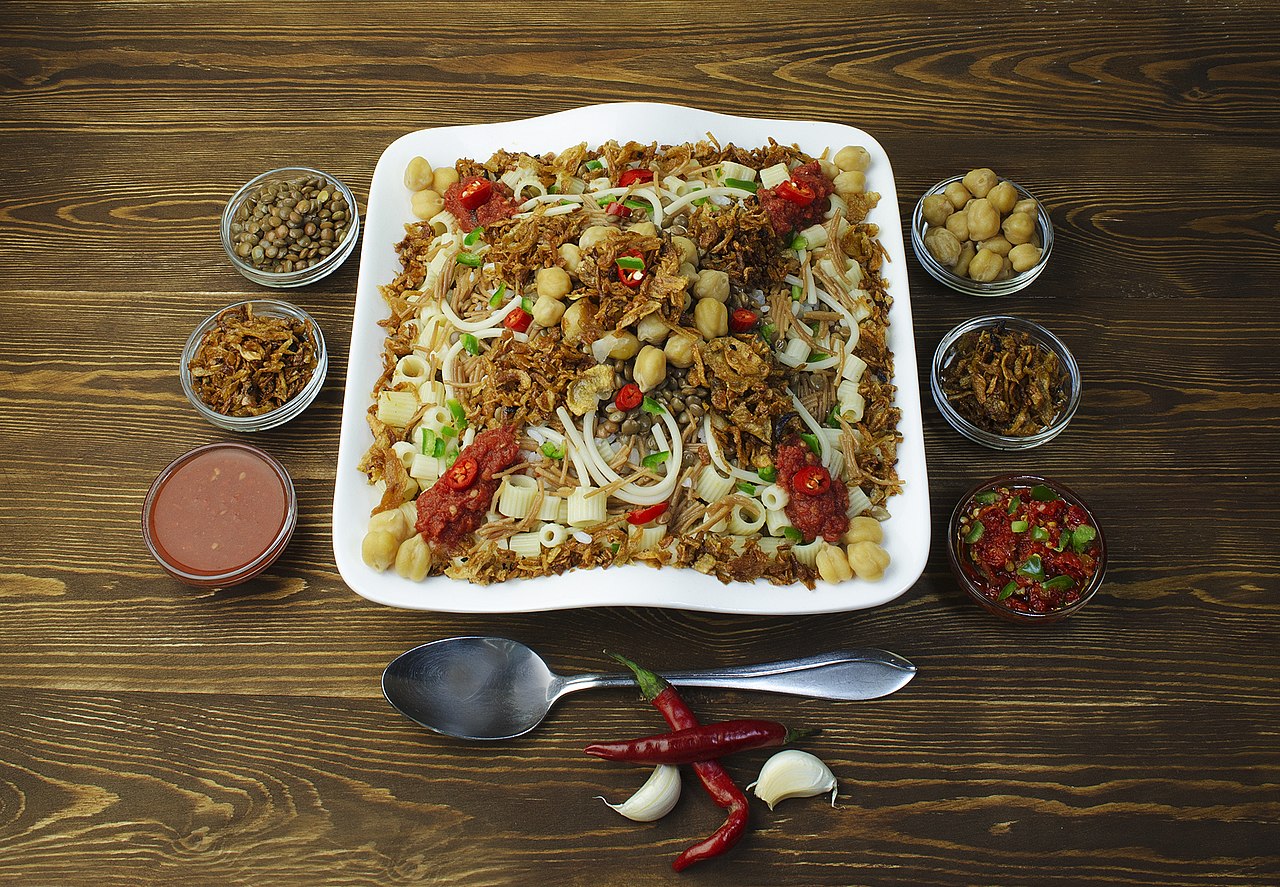 DishDina Said / Wikimedia Commons (CC BY-SA 4.0)
Egypt's national dish and pure street-food comfort: a bowl of rice, lentils and macaroni topped with spiced chickpeas, tangy tomato sauce, garlic vinegar and crispy fried onions. It is cheap, filling and entirely vegetarian, sold everywhere from humble stalls to dedicated koshari halls.
Abou Tarek in downtown Cairo is the most famous spot, often cited as the birthplace of the modern version.
 DishHassan Hassoon / Wikimedia Commons (CC0)
Egypt's own falafel, made from fava beans rather than the chickpeas used elsewhere in the region, giving it a distinctly green interior, herby flavour and lighter texture. It is crisp outside, soft inside, and usually eaten fresh from a street stall in warm pita with tahini, tomato and pickles.
 DishHabib M'henni / Wikimedia Commons (CC BY-SA 3.0)
A garlicky, deep-green stew made from finely chopped jute mallow leaves, simmered into a thick, almost slippery broth and served over rice with chicken or rabbit. The texture surprises many first-time visitors, but it is one of Egypt's most beloved home-style comfort dishes.
 DrinkMRG90 / Wikimedia Commons (CC BY-SA 4.0)
A deep-red infusion of dried hibiscus petals, tart and refreshing, served hot in winter and chilled over ice in summer at cafes and juice stands across the city. It is a distinctly Egyptian everyday drink, easy to love and very different from typical Western teas.
 Dishmedea_material / Wikimedia Commons (CC BY 2.0)
Whole pigeon stuffed with spiced rice, freekeh or liver, then grilled or slow-cooked until tender, a dish with roots stretching back to Pharaonic-era pigeon breeding. Egyptians are the only people in the region who eat pigeon this widely, making it a genuinely novel dish for most foreign visitors to try.
Farahat near Al-Azhar and Abou El Sid in Zamalek are well-known spots to order it.
 SweetReem Al-Kashif / Wikimedia Commons (CC BY-SA 4.0)
Egypt's answer to bread pudding: layers of flaky pastry or filo baked in warm milk, sugar, nuts and raisins until golden and bubbling on top. It is rich, warming comfort food, usually served hot straight from the oven at the end of a meal.
Personalized picks based on your interests and what's nearby.
Ask, share, or connect with travelers nearby — and earn points.
Real restaurants, cafés, sights and things to do across the city — live from the map, with our fair-price and scam intelligence on top.
What locals pay — check a quote before you hand over cash.
Book direct — often cheaper than platforms, with free cancellation more often than not.
Set your city and dates — we open the live results, no inventory held
Flights to Cairo
Compare flights & hotels on Aviasales — your city auto-detected, no extra fees.
Trzly compares across the big providers and points you to the cheapest. We don't take your booking or hold your money — we send you straight to the source, name the price, and warn you about scams.
Cheapest for you first — never by commission. When booking direct is cheaper, we say so, even when we earn nothing. Rank order is a function of price and trust only.
Hotels, apartments & guesthouses
Tours, tickets & local experiences
Restaurants, cafés & honest local prices
Trains, buses, transfers & car hire
The essentials most travellers book anyway — real providers for this destination.
Real fares, not tourist prices.
The simplest, fairest way into the city, with an upfront price on the app. Meet your driver at the designated pickup point and avoid touts inside the terminal.
Public and shuttle buses connect the airport with central districts very cheaply. Slower and less direct, but a good budget option if you travel light.
A metro line serves the airport area and connects into the wider network. Very cheap and traffic-free, though you may need a short transfer to reach it.
A cheap, expanding underground network that beats the traffic. Stations serve the centre, Coptic Cairo and beyond. Keep your ticket and watch for women-only carriages.
Widely used and reliable, with upfront pricing that removes haggling. The easiest way to move around the city, especially with luggage or in the heat.
Quarters like Islamic Cairo, downtown and Coptic Cairo are best explored on foot. Take care crossing busy roads and keep valuables secure in crowds.
The cooler months from October to April bring pleasant days ideal for sightseeing, with December to March the most comfortable. Summers from June to August are very hot, often above 38C, making midday exploring exhausting; start early and rest in the afternoon.
Two to three days cover the main museums, Islamic and Coptic Cairo and the bazaars, with a separate day for the Giza pyramids nearby. Add more time if you want a relaxed pace.
The Grand Egyptian Museum near Giza now holds the headline collections, including Tutankhamun. The historic Egyptian Museum on Tahrir Square still displays many pieces. Check which items are where before you go.
Central and tourist areas are generally safe by day and busy into the evening. Take normal city precautions, mind the traffic, watch your belongings in crowds, and dress modestly around religious sites.
Ride-hailing apps are the easiest for door-to-door trips with upfront prices, while the metro is extremely cheap and beats the traffic on longer hops. Agree fares in advance for any street taxi.
Yes. Dress modestly with shoulders and knees covered at mosques and churches, and women should carry a scarf to cover the hair. Shoes come off before entering prayer halls.
Places like Cairo — real prices, real scam warnings, honestly checked.


 Reviewed
 Reviewed