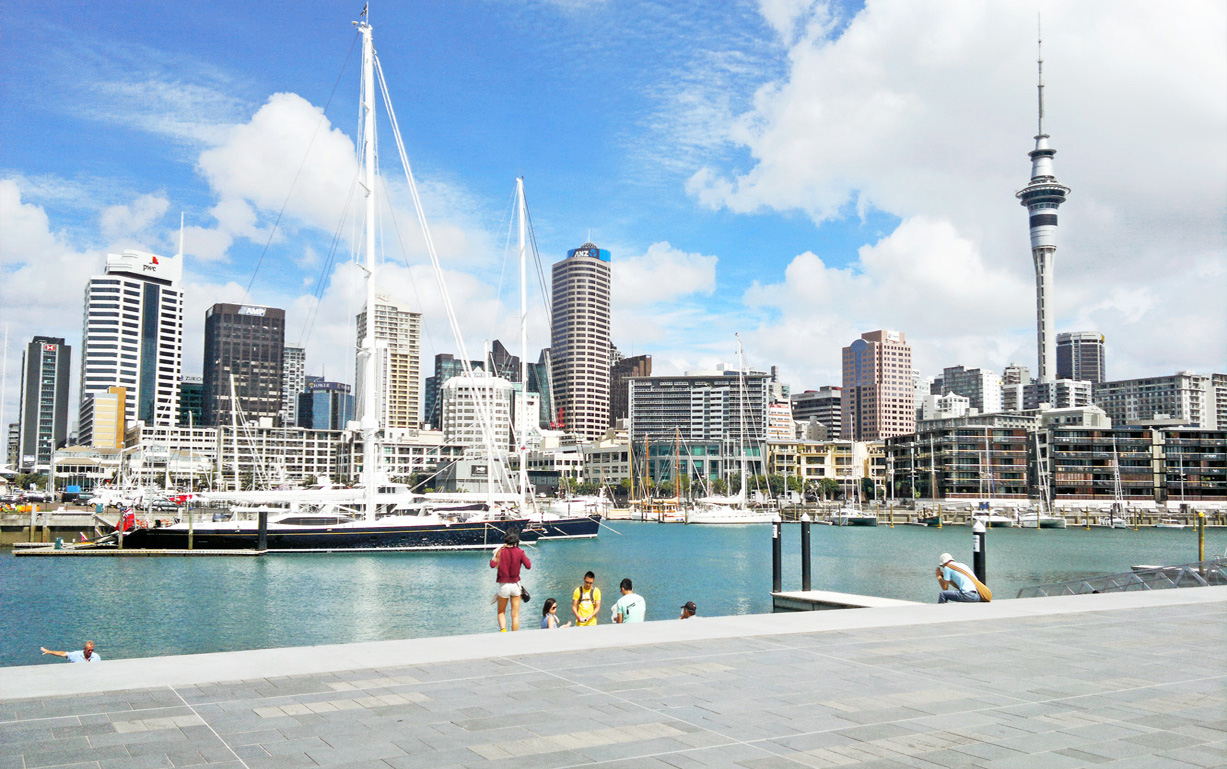
The best time to visit Auckland is the warm summer from December to February, when temperatures sit around 20–25°C and conditions are at their best for the beaches and the Hauraki Gulf islands like Waiheke and Rangitoto — though this is also the busiest and priciest season. The shoulder months of spring (September to November) and autumn (March to May) offer mild, pleasant weather with fewer crowds and lower prices, making March, April, October and November a great balance. Winter (June to August) is cool rather than cold, wet and quiet, with July the wettest month, and is the cheapest time to come. Auckland has no true dry season and weather can change quickly, so pack a light layer whatever the month, and remember the New Zealand sun is strong year-round.
Auckland's wild west-coast beaches, such as Piha and Bethells, have black volcanic sand and some of the strongest, deadliest rip currents in New Zealand, with a high drowning and rescue rate. Only swim between the red-and-yellow flags when lifeguards are on patrol, never swim alone or outside patrol hours, and if caught in a rip stay calm, float, raise an arm for help and let it carry you out before swimming parallel to shore.
New Zealand's UV levels are among the highest in the world and you can burn quickly even on a mild or overcast day. Wear a high-SPF sunscreen, a hat and sunglasses, seek shade in the middle of the day, and cover up on the beach and during walks — the local advice is to 'slip, slop, slap and wrap'.
Auckland is a safe and relaxed city, but as anywhere take normal care late at night in the central city, particularly around some parts of Queen Street and the nightlife areas after bars close. Keep valuables out of sight, don't leave anything in a parked car, and use a taxi or rideshare rather than walking alone very late.