名所
Brandenburg Gate
Berlin's iconic 18th-century neoclassical gate and a symbol of German reunification. Free to visit at any hour; it is at its most atmospheric early in the morning or floodlit at night, away from the daytime crowds.
無料 30 分
 Pro2 / Wikimedia Commons (CC BY-SA 3.0)
Booking sites sell to you. We protect you: verified price bands plus the exact tricks travellers hit in this place.
検証済み · 2026年8月6日
Not just a guide — a community. Travellers who've been here give real tips, and people going your dates are here to meet.
Berlin is Germany's capital and largest city, a sprawling, green and famously unpretentious place where the weight of twentieth-century history sits next to a restless creative energy. In a single day you can stand under the Brandenburg Gate, trace the line of the Berlin Wall at the East Side Gallery, climb Norman…
時間を割く価値のある名所と体験——正直な価格つき。
Berlin's iconic 18th-century neoclassical gate and a symbol of German reunification. Free to visit at any hour; it is at its most atmospheric early in the morning or floodlit at night, away from the daytime crowds.
The glass dome atop Germany's parliament offers a free spiral walk with city views and an audio guide. Entry is free but you must register online in advance and bring photo ID, as places are limited.
A UNESCO-listed cluster of five world-class museums including the Neues Museum and Alte Nationalgalerie. Note that the Pergamonmuseum itself is closed for renovation until 2027; check which houses are open before buying a ticket.
The longest surviving stretch of the Berlin Wall, painted with murals by artists from around the world. Free and open-air along the Spree; go early to photograph the famous murals without crowds.
The must-try local dishes, sweets and fruits — including the exotic ones you won't find back home.
 DishLupus in Saxonia / Wikimedia Commons (CC BY-SA 4.0)
A steamed-then-fried pork sausage, sliced and smothered in a spiced ketchup-and-curry sauce, usually served with chips or a bread roll. It is Berlin's defining street snack, invented in the city in 1949, and best eaten standing up at an Imbiss stand with a wooden fork.
 DishAleGranholm / Wikimedia Commons (CC BY 2.0)
The stuffed flatbread doner as most of the world knows it was shaped by Turkish workers in Berlin in the 1970s, and the city remains its spiritual home. Look for busy stalls with a fast-turning spit, crisp salad and garlic and chilli sauces for the real thing.
 SweetSebastian Koppehel / Wikimedia Commons (CC BY 4.0)
A round, deep-fried doughnut filled with jam and dusted in sugar, known simply as a Pfannkuchen in Berlin rather than a Berliner. It is eaten year-round but especially at New Year, when one bun is sometimes mischievously filled with mustard as a prank.
 DishTraumrune / Wikimedia Commons (CC BY-SA 3.0)
A hearty Berlin classic of boiled, gelatinous cured pork knuckle served with sauerkraut, pease pudding and potato. It is old-school comfort food from the city's working-class kitchens; the northern boiled version is softer than the crisp-roasted southern Schweinshaxe.
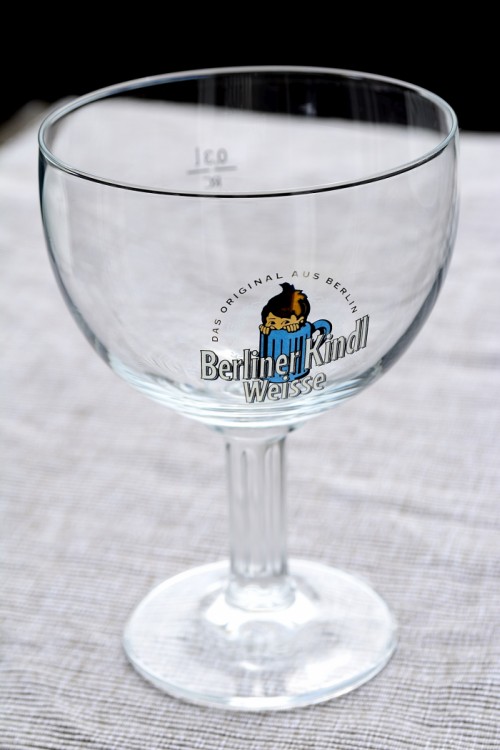 DrinkBFunken / Wikimedia Commons (CC BY-SA 3.0)
A tart, low-alcohol wheat beer traditionally served with a shot of green woodruff or red raspberry syrup to soften the sourness, arriving a cheerful green or pink. It is a refreshing summer drink and a local curiosity worth trying once in a beer garden.
あなたの興味と近くのスポットに基づいたおすすめ。
Ask, share, or connect with travelers nearby — and earn points.
Real restaurants, cafés, sights and things to do across the city — live from the map, with our fair-price and scam intelligence on top.
地元の人が払う額——お金を払う前に見積もりを確認。
このような料金は日付が近づくにつれて下がることが多いです——予定に余裕があれば待つ価値があります。
手口: Some drivers, including private cars posing as taxis away from official ranks, hide the real meter and use a phone app showing an inflated fare, then demand a high price at the end.
避け方: Take taxis only from official ranks or a known ride app. Insist the physical meter is visible and running, and know the rough fare for your route before you set off.
Set your city and dates — we open the live results, no inventory held
Flights to Berlin
Compare flights & hotels on Aviasales — your city auto-detected, no extra fees.
Trzly compares across the big providers and points you to the cheapest. We don't take your booking or hold your money — we send you straight to the source, name the price, and warn you about scams.
Cheapest for you first — never by commission. When booking direct is cheaper, we say so, even when we earn nothing. Rank order is a function of price and trust only.
Hotels, apartments & guesthouses
Tours, tickets & local experiences
Restaurants, cafés & honest local prices
Trains, buses, transfers & car hire
The essentials most travellers book anyway — real providers for this destination.
観光客価格ではなく、実際の運賃。
A fast regional train linking BER Airport with Berlin Hauptbahnhof in about 23 minutes via Ostkreuz, running every half hour. Covered by a single ABC ticket and the simplest link to the centre.
The S9 and S45 lines connect BER with the city, stopping more often than the FEX and taking around 45 to 60 minutes. Cheaper than a taxi and useful if your accommodation is near an S-Bahn stop.
Licensed taxis wait at official ranks outside Terminals 1 and 2. Best for late arrivals or heavy luggage, but far pricier than the train. Confirm the meter is running and expect a small airport surcharge.
Berlin's underground is fast, frequent and reaches most neighbourhoods. A single AB ticket or day pass covers it along with the S-Bahn, trams and buses. There are no ticket barriers, so buy before you ride.
Trams run mainly in the eastern districts and buses fill the gaps everywhere, all on the same ticket as the U-Bahn. The number 100 and 200 buses double as a cheap sightseeing route through the centre.
Berlin is too spread out to cross on foot, but individual areas like Mitte, Kreuzberg and Prenzlauer Berg are a pleasure to explore slowly. Combine short walks with the U-Bahn between districts.
Late spring to early autumn (May to September) brings the mildest weather, long daylight and the city's outdoor cafes, beer gardens and festivals in full swing. Summer is warm but rarely oppressive, winters are cold, grey and dark, while December adds atmospheric Christmas markets to the chill.
Three to four days lets you cover the historic centre, the Wall sites and Museum Island at a reasonable pace, with time to explore a neighbourhood or two like Kreuzberg or Prenzlauer Berg.
Buy one before you ride from a machine or the BVG app. There are no ticket barriers, but plain-clothes inspectors check regularly and fine you 60 euros on the spot for riding without a valid ticket.
The main Pergamonmuseum is closed for renovation and is due to reopen on 4 June 2027. In the meantime the separate 'Das Panorama' building and the other four Museum Island houses remain open.
It is one of the more affordable major European capitals. Street food, public transport and many museums are reasonably priced, though smart restaurants and nightlife can add up quickly.
The FEX Airport Express reaches Hauptbahnhof in about 23 minutes and the S-Bahn serves more stops, both on a single ABC ticket. Taxis are far pricier but convenient for late arrivals or heavy bags.
Places like Berlin — real prices, real scam warnings, honestly checked.
 検証済み
検証済み


