Atração
Petronas Towers
The iconic twin towers with a double-decker skybridge and a high observation deck. Buy timed tickets online in advance as slots sell out, and visit the surrounding park for free photos from below.
US$ 28–38 1,5 h
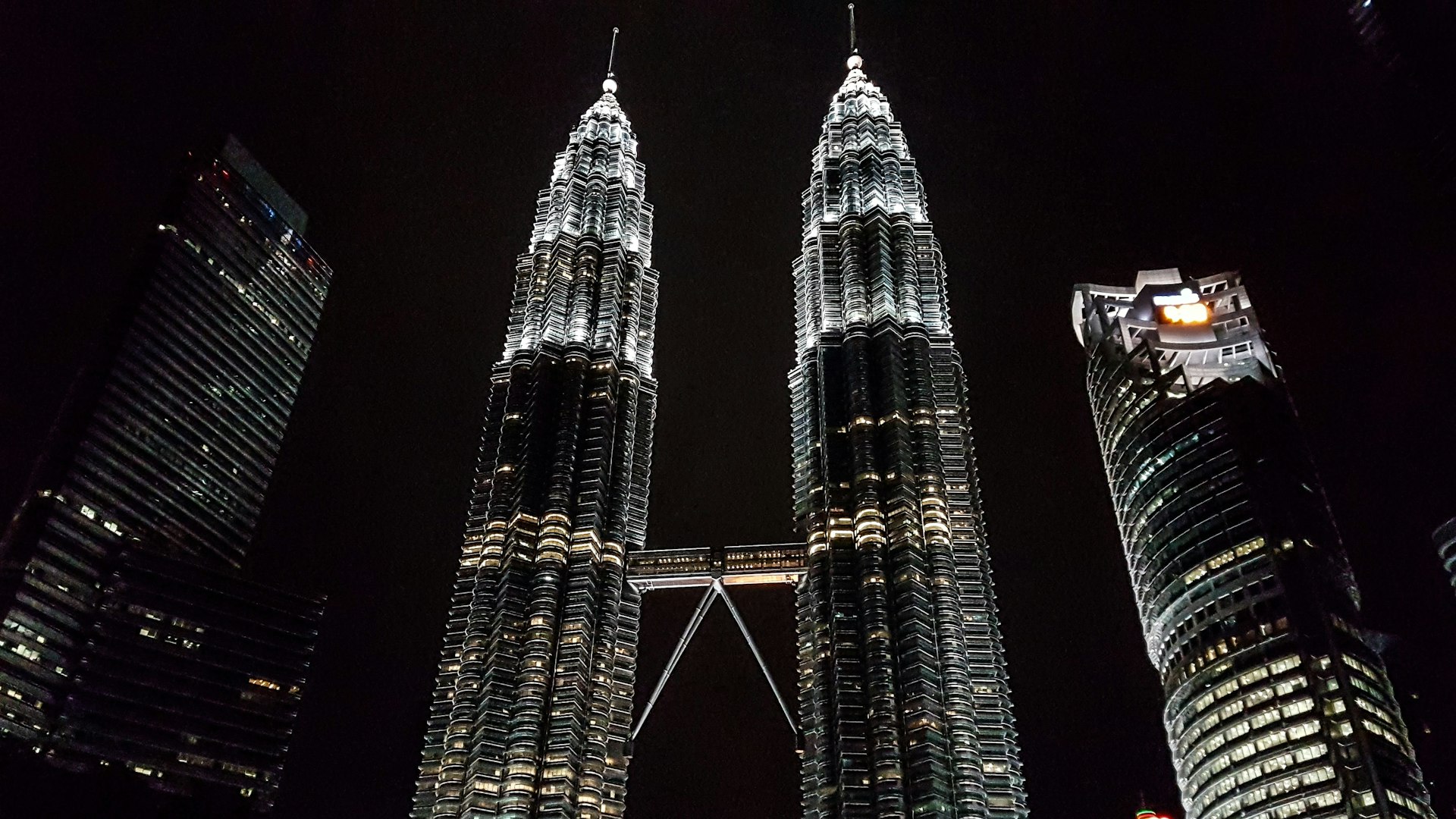 Wayne Chew / Unsplash
Booking sites sell to you. We protect you: verified price bands plus the exact tricks travellers hit in this place.
Not just a guide — a community. Travellers who've been here give real tips, and people going your dates are here to meet.
Kuala Lumpur is Malaysia's fast-moving capital, a city where gleaming skyscrapers rise above colonial shophouses, Chinese temples, mosques and Hindu shrines within a few streets of each other. The twin Petronas Towers anchor a modern core of malls and parks, while districts like Chinatown, Little India and the old…
As atrações e experiências que merecem o seu tempo — com preços justos.
The iconic twin towers with a double-decker skybridge and a high observation deck. Buy timed tickets online in advance as slots sell out, and visit the surrounding park for free photos from below.
A vast limestone cave temple reached by a steep, colourful stairway guarded by a giant golden statue. Free to enter the main cave; dress modestly and watch your belongings around the monkeys.
A communications tower with an observation deck and sky box, set on a forested hill. Views rival the towers and it stays open later; the surrounding forest eco-park is a quiet green escape.
A landscaped park at the foot of the Petronas Towers with a lake, fountains and a jogging path. Free to enter and the best spot for evening photos when the towers light up.
The must-try local dishes, sweets and fruits — including the exotic ones you won't find back home.
Malaysia's national dish: coconut-milk rice with sambal, fried anchovies, peanuts and egg — eaten any time of day, from wrapped banana-leaf parcels to sit-down platters.
Skewered, char-grilled meat dipped in rich peanut sauce and served with rice cakes and cucumber — a Jalan Alor street-food staple.
A flaky, hand-stretched flatbread torn and dipped into dhal or curry — Malaysia's favourite breakfast, sold at mamak stalls open around the clock.
Sweet, milky tea theatrically 'pulled' between two cups to froth it up — order one at any mamak stall for the full show.
Southeast Asia's notoriously pungent 'king of fruits' — banned from hotels and public transport for its smell, but prized by fans for its rich, custard-like flesh.
Seleção personalizada com base nos seus interesses e no que está por perto.
Ask, share, or connect with travelers nearby — and earn points.
Real restaurants, cafés, sights and things to do across the city — live from the map, with our fair-price and scam intelligence on top.
O que os locais pagam — verifique uma cotação antes de pagar em dinheiro.
Reservou direto? Muitos fornecedores oferecem cancelamento gratuito em até 24 horas.
Set your city and dates — we open the live results, no inventory held
Flights to Kuala Lumpur
Compare flights & hotels on Aviasales — your city auto-detected, no extra fees.
Trzly compares across the big providers and points you to the cheapest. We don't take your booking or hold your money — we send you straight to the source, name the price, and warn you about scams.
Cheapest for you first — never by commission. When booking direct is cheaper, we say so, even when we earn nothing. Rank order is a function of price and trust only.
Hotels, apartments & guesthouses
Tours, tickets & local experiences
Restaurants, cafés & honest local prices
Trains, buses, transfers & car hire
The essentials most travellers book anyway — real providers for this destination.
Tarifas reais, não preços para turistas.
A fast non-stop train from the airport to KL Sentral in about half an hour with a fixed fare. The simplest link, then transfer to monorail, rail or Grab for your hotel.
Budget coaches run from the airports to KL Sentral. Much cheaper than the train but slower and subject to traffic. Good if you are watching costs and travelling light.
Door-to-door and handy with luggage or a group. Use the official coupon taxi counter or the Grab app for a fixed price, and avoid drivers touting rides inside the terminal.
An elevated line linking Bukit Bintang, Chinatown and KL Sentral through the city centre. Cheap and scenic, though it is separate from some rail lines when you transfer.
A clean, expanding rail network covering the wider city and suburbs. Pair it with the monorail using a stored-value card for the cheapest way around town.
The default door-to-door option, with the fare fixed in the app before you ride. Reliable and cheap for short hops, with prices rising in rain and rush hour.
Kuala Lumpur is hot and humid all year with no real dry season, but the drier months from May to August tend to see less rain. Downpours are short and heavy any time, so carry an umbrella and plan indoor sights for the afternoon. The city stays busy year round.
Two to three days cover the Petronas Towers, Chinatown, a museum or two and a day trip to the Batu Caves, with plenty of time for food. It also works well as a hub for onward travel.
The airport shuttle bus is cheapest but slowest. The KLIA Ekspres train is fast with a fixed fare, and a Grab or coupon taxi suits groups with luggage. Avoid drivers touting rides inside the terminal.
Locals generally boil or filter tap water and most visitors stick to cheap bottled water. Tap water is fine for brushing teeth and washing.
Yes at markets like Central Market and Petaling Street, where prices are flexible and copies are common. Malls, supermarkets and restaurants have fixed prices and do not bargain.
Dress modestly with shoulders and knees covered at mosques, temples and the Batu Caves. Some sites lend a sarong or robe, and you may need to remove your shoes before entering.
Places like Kuala Lumpur — real prices, real scam warnings, honestly checked.
 Revisto